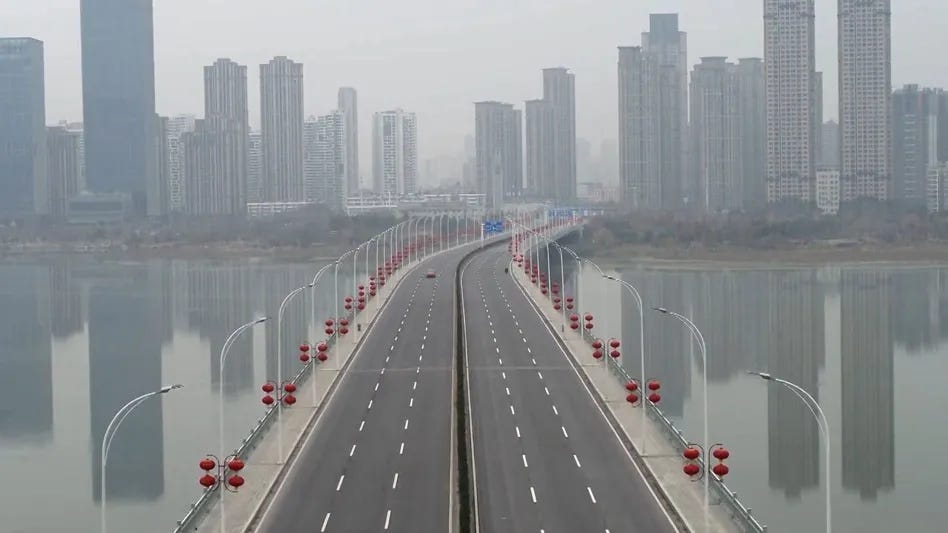
Wuhan during the lockdown in 2020. Film still from Coronavirus (2020). Image source: Giloo
Six Years since the Wuhan Lockdown: Seeking Accountability for a Historic Catastrophe
By Hu Ping
中
国民间档案馆 China Unofficial Archives is a reader-supported publication. To
receive new posts and support our work, please consider becoming a free
or paid subscriber. Six
years ago, at 2:30 a.m. on January 23, 2020, the Wuhan municipal
government issued its first announcement regarding the prevention and
control of what came to be known as COVID-19. It declared that,
effective 10:00 a.m. that day, all city transportation would be
suspended and the city closed, with residents prohibited from leaving
unless absolutely necessary. This event, now known as the Wuhan
lockdown, occurred 23 days after the state-run People’s Daily first reported the discovery of the new virus in Wuhan on December 31, 2019.
In her diary entry on February 27, 2020, the writer Fang Fang wrote:
“It is an indisputable fact that over twenty days were lost between the
initial discovery of the virus and Wuhan’s lockdown. Where was the crux
of this delay? Exactly who, and for what reason, provided the virus the
time and space to spread, leading to a lockdown unprecedented in
Wuhan’s history?”
The
COVID-19 pandemic eventually spread from China to the entire world.
According to public data from the World Health Organization (WHO), by
March 19, 2020—nearly two months after the Wuhan lockdown began—the
virus had reached over 150 countries and regions, and the number of
global cases far exceeded those within China. This rare and massive
pandemic profoundly reshaped global economics and politics. Within
China, provinces and cities implemented draconian “dynamic zero-COVID”
measures, resulting in severe restrictions on daily life, human rights
violations, and frequent secondary disasters. Finally, in early
December 2022, the Chinese government abruptly lifted the lockdown
without any contingency plans or preparation, leading to a massive wave
of deaths.
To
date, the Chinese government’s attitude toward the Wuhan lockdown is
denial: no mentions, no commemorations, and no review or evaluations.
The most recent official document is a white paper titled “China’s
Actions and Position on COVID-19 Prevention, Control, and Virus
Tracing,” released by the State Council Information Office on April 30,
2025. This document primarily serves to counter external criticism and
highlight China’s early contributions; its evaluation of the lockdown
itself remains unchanged from the official rhetoric of 2020–2021,
offering no new reflections or lessons learned. However, we must not
let the spirit of accountability fade—such a historic catastrophe
requires a full accounting.
1. Was the Cover-Up Directed by Local or Central Authorities?
In
the immediate wake of the Wuhan lockdown, calls for accountability were
widespread. Local officials in Wuhan were the primary targets of public
outrage. The first question people asked was: Why was the outbreak not
disclosed to the public immediately? A vital piece of context is the
case of Dr. Li Wenliang, who warned colleagues in a WeChat group on
December 30, 2019, about a “SARS-like virus,” only to be summoned and
reprimanded by Wuhan police four days later. Dr. Li died of the virus
on February 7.
Here’s a review of the timeline. On the afternoon of January 27, 2020, Wuhan Mayor Zhou Xianwang admitted in a Chinese Central Television interview that
the disclosure of the epidemic had not been timely. However, he then
shifted the responsibility, stating: “Everyone needs to understand that
because this is an infectious disease, it falls under the Infectious
Disease Prevention and Control Law. It must be disclosed according to
the law. As a local government official, I could only disclose the
information once I had received it and been authorized to do so.”
On February 12, the official Wuhan website published an article (since deleted) titled “Why Not Give the Wuhan Mayor More Warmth as He Fights the Epidemic?” which
revealed: “As early as December, when the outbreak occurred, Wuhan had
already reported the situation to national health departments. An
expert group also conducted an in-depth investigation in Wuhan and
provided preliminary conclusions.”
On January 28, during a meeting with WHO Director-General Tedros Adhanom Ghebreyesus, Xi Jinping stated that
regarding the pandemic response, “I have been personally commanding and
personally deploying resources.” The February 15 issue of the Communist
Party mouthpiece Qiushi published
the full text of Xi’s February 3 speech, in which he claimed he had
issued requirements for epidemic control as early as the January 7
Politburo Standing Committee meeting. This suggests that by January 7
at the latest, the response was under Xi’s “personal command.”
Chinese
politics is almost never transparent. Xi has never elaborated on what
those January 7 instructions actually were, and the original Xinhua
News Agency report on that meeting did not mention the virus at all.
All this evidence suggests that the responsibility for concealing the
outbreak lies with the central government, not the local authorities.
Following
the 2003 SARS crisis, the Chinese government spent vast sums to
establish a national monitoring system for infectious diseases and
public health emergencies. Coronaviruses like COVID-19 were a priority
for this system, which launched on April 1, 2004. Furthermore, the
Chinese government established the “National Emergency Plan for Public
Health Emergencies” in 2006. Had the government activated these
mechanisms and taken action when the virus was first detected, the
outbreak might have been nipped in the bud, potentially averting a
global catastrophe.
Zhou Xianwang, former mayor of Wuhan
2. Global Spread: Did the Chinese Government Mislead the World?
Looking
back, it is evident that the Chinese government provided false
information and inaccurate data at the start of the pandemic, which
severely misled the WHO and foreign governments. Dr. Gauden Galea, the
WHO representative in China at the time, noted that
the WHO was entirely dependent on information reported by
China—including the critical question of human-to-human
transmission—and therefore failed to issue timely warnings. Deborah
Birx, a leader of the U.S. coronavirus task force, remarked that
the medical community interpreted Chinese data to mean the situation
was serious but manageable, not a potential global pandemic.
When
Wuhan was locked down on January 23, some argued that the world should
have understood the gravity of the situation then. However, this
ignores the fact that the Chinese government’s propaganda at the time
insisted the lockdown was a massive sacrifice that had contained the
virus within China, buying the world time while overseas cases remained
under 1%. This narrative continued to mislead the international
community. Even on January 24, The Lancet editor
Richard Horton stated there was no need to panic, and the WHO advised
against travel restrictions. When the U.S. government announced a
flight ban in late January, China denounced the move as “unkind.” The
world was effectively blinded by a combination of flawed data and state
propaganda.
The Wuhan Institute of Virology
3. Six Years Later, the Origin of the Virus Remains Unsolved
Today,
six years after the lockdown, we still do not know if the virus was a
natural spillover or a laboratory leak, nor if it was natural or
synthetic.
From the beginning of the outbreak, many suspected a laboratory leak. This suspicion was
based on the fact that while the virus is believed to have originated
in bats from Yunnan, the outbreak occurred in Wuhan—thousands of
kilometers away from those bat habitats. Furthermore, the Wuhan
Institute of Virology houses the world’s largest collection of bat
virus samples. Since the outbreak began in Wuhan, the lab was a logical
suspect. Scientists also noted that SARS-CoV-2 possesses a unique “furin cleavage site” in
its spike protein, a feature not found in similar coronaviruses, and
the Wuhan Institute of Virology had been conducting “gain-of-function”
research related to such features.
In
contrast to the 2003 SARS outbreak—where the animal source, civet cats,
was identified in five months—no animal host has been found for
COVID-19 after six years. The scientific community still has doubts and
cannot rule out a lab leak. The Chinese government’s refusal to allow
independent investigations and its suppression of information have only
deepened these suspicions. What is certain, however, is that the
Chinese government’s early concealment and dissemination of false data
constituted a severe violation of the International Health Regulations,
for which it must be held accountable.
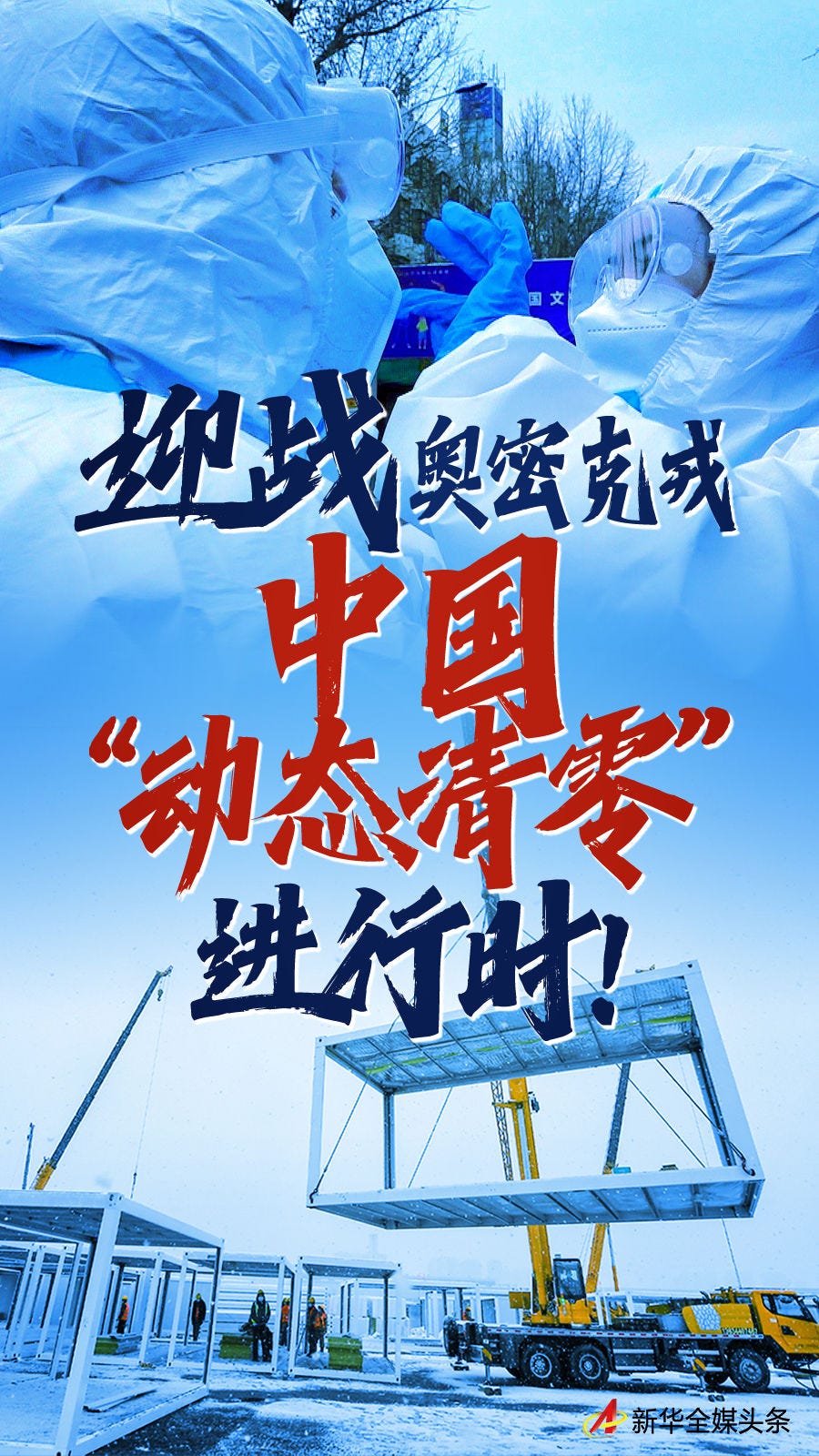
A
propaganda poster touting the “zero-COVID” policy. The words in the
poster state: “Battling Omicron; China’s “Dynamic Zero-COVID” is
ongoing!”
4. The Enigma of China’s COVID-19 Death Toll
WHO data suggests
that by mid-January 2026, approximately 7.1 million people globally had
died from COVID-19. Meanwhile, the death toll reported by the Chinese
government stands at only 120,000.
This figure of 120,000 is widely viewed as false. Former China CDC Chief Epidemiologist Wu Zunyou provided data that
suggests a much higher number. In January 2023, Wu stated that 80% of
China’s population had been infected following the December 2022
reopening. He later cited a case fatality rate (CFR) of 0.08% for that
period. Based on these numbers—1.4 billion people × 80% infection rate
× 0.08% CFR—the death toll for those two months alone would be roughly
896,000.
Even
896,000 is likely an underestimate. The 0.08% CFR was an international
average, but China’s situation was unique. China’s domestic vaccines
were less effective, and because of the zero-COVID policy, the
population lacked the hybrid immunity found in other countries where
people had already been infected. For most Chinese citizens, the late
2022 wave was their first exposure to the virus. Consequently, the
death toll was likely several times higher than the international
average.
Because
reliable data is unavailable, researchers often use “excess deaths”
(the number of deaths above the historical average) as a proxy. While
not all excess deaths are directly caused by COVID-19—some result from
medical shortages, chronic disease neglect, or economic hardship—they
provide the most accurate estimate of a pandemic’s impact.
In
China, cremation data is a primary source for estimating deaths, as
burial is largely prohibited. While many rural deaths during the peak
of the pandemic went unrecorded due to overwhelmed crematoria or local
burials, the available records are still telling.
By April 2023, The Wall Street Journal noted that
official cremation reports from over 30 Chinese regions had either been
deleted or were no longer being updated. However, a few scattered data
points were leaked before being censored:
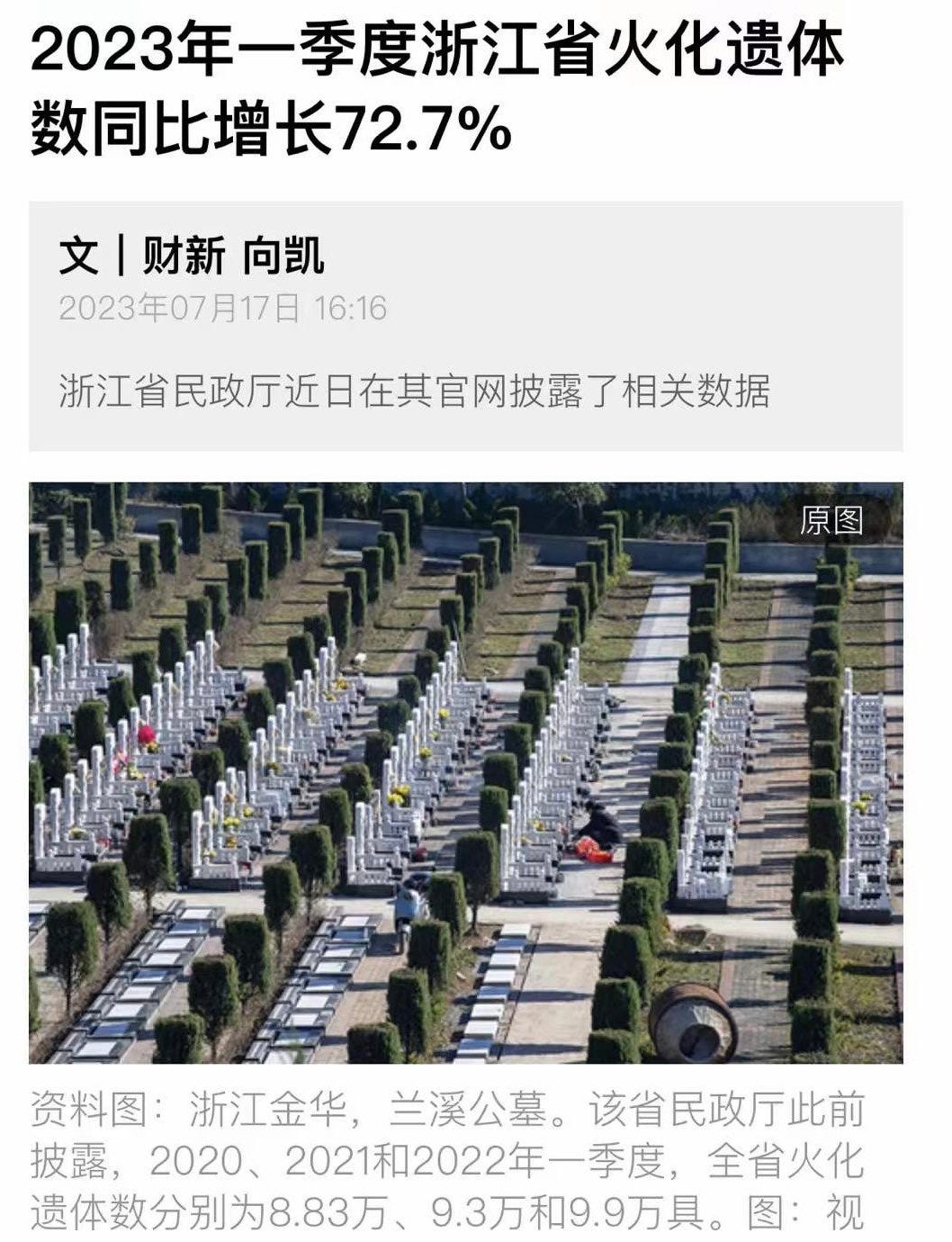
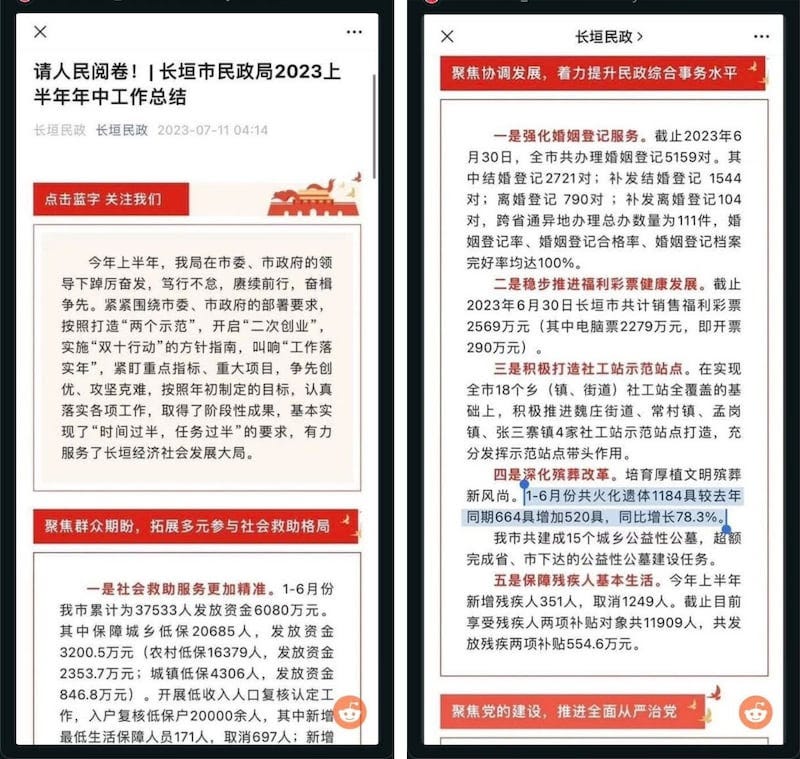
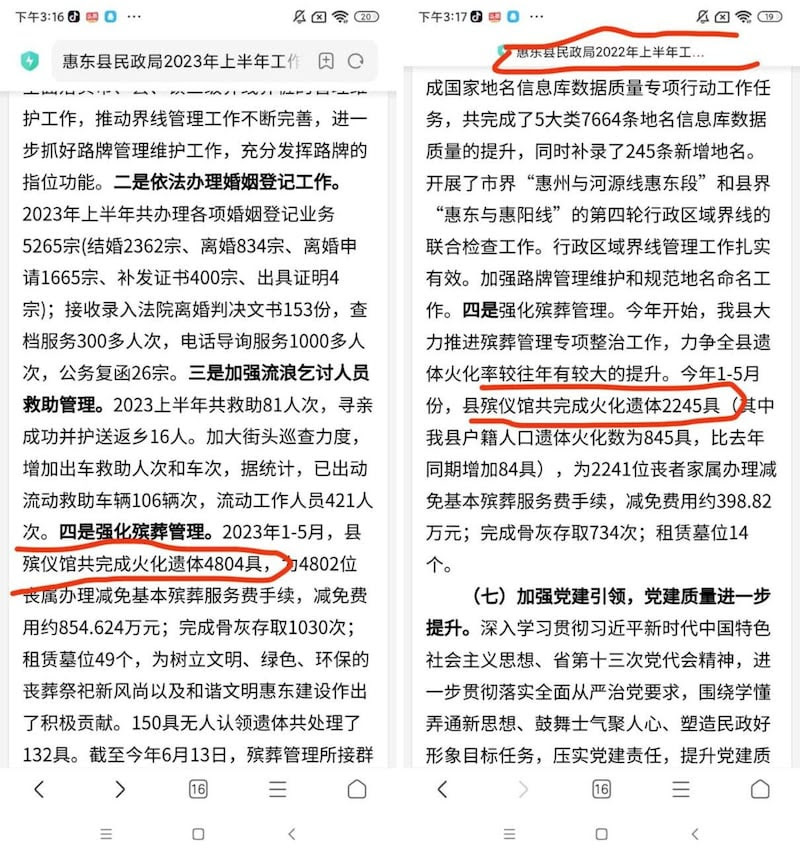
1. Zhejiang Province: In Q1 2023, cremations reached 171,000—a 72.7% increase over the previous year.
2. Changyuan, Henan: In the first half of 2023, cremations rose by 78.3% compared to the same period in 2022.
3. Huidong, Guangdong: Cremations from January to May 2023 increased by 114% year-on-year.
Extrapolating
from these leaked figures, the number of excess deaths in China during
the biggest wave from late 2022 to early 2023 was at least 4 million,
and perhaps as high as 5.95 million. When combined with deaths from the
preceding three years, the total represents a staggering loss of life
that likely ranks among the highest in the world.
Many
countries in the world botched handling the COVID-19 outbreak, but
China’s case is still unique. The virus originated in China; thus,
clarifying its origins should be a moral obligation of the Chinese
government. In addition, the Chinese government had a unique
opportunity to avoid the mass death found in other countries because of
its initially successful lockdown strategy. However, its reckless
decision to not take preventive measures such as using effective mRNA
vaccines led to untold misery and a high death toll. Despite the
difficulty, Chinese civil society must still push for a reckoning.
Recommended archive:
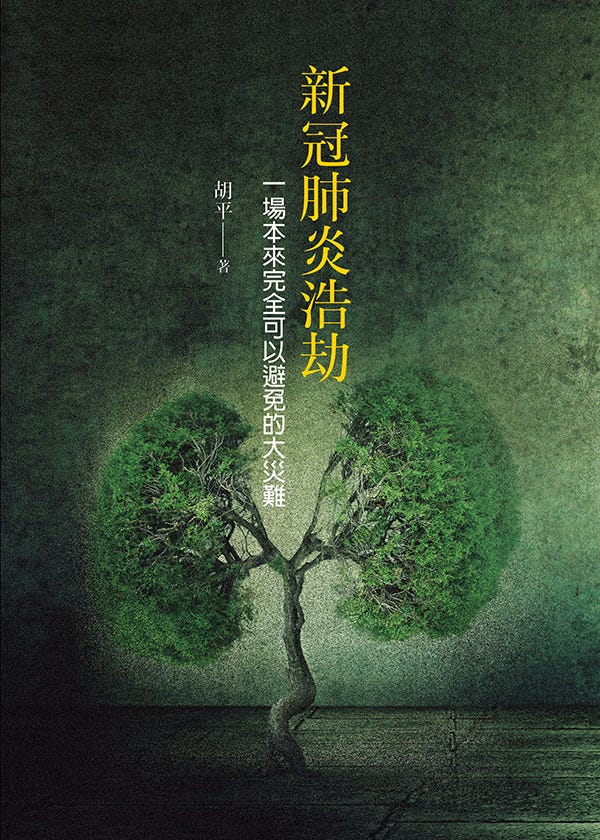
Hu Ping: The COVID-19 Catastrophe: A Disaster That Could Have Been Entirely Avoided
————————
Link:chinaunofficialarchives.substack.com/p/c2b
|